The Flavors of the Philippines: A Journey Through the "Original Fusion"
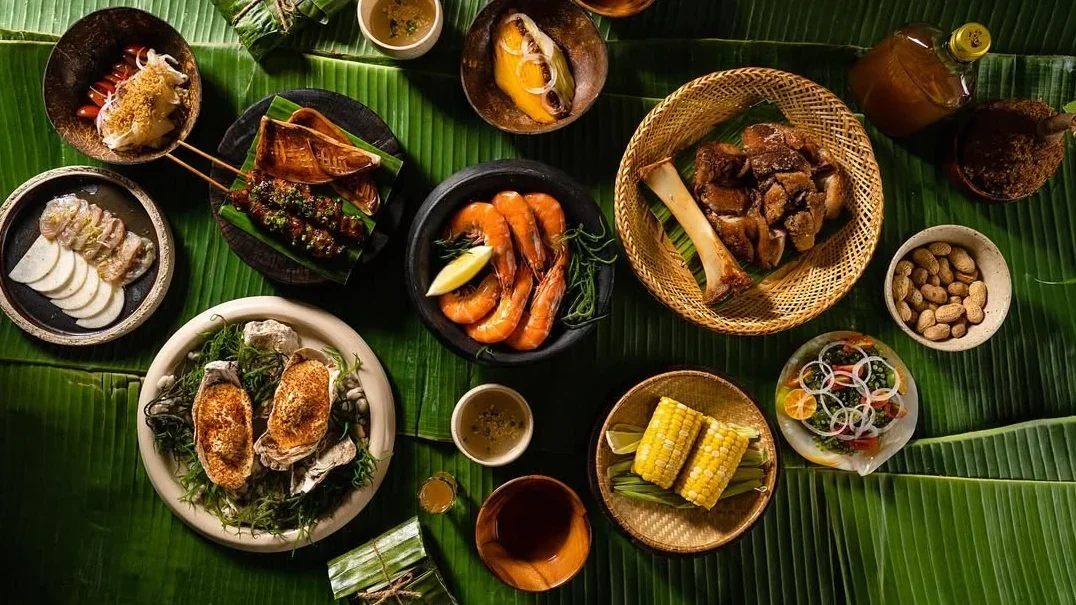
Filipino cuisine is a vibrant tapestry of history, a culinary landscape where indigenous Malay traditions meet 300 years of Spanish influence, spiced with Chinese ingenuity and American pragmatism. It is often called the world’s first "fusion" cuisine—a bold claim backed by every savory, sour, and sweet bite.
The Origins: A Melting Pot on a Plate
The story of Filipino food begins long before colonial ships graced its shores.
Malay Roots: The foundation lies in Austronesian traditions—steaming, boiling, and charcoal-grilling fresh seafood, coconuts, and root vegetables.
Chinese Influence: Traders from Fujian introduced noodles (Pancit), soy products, and the art of stir-frying, which the locals seamlessly integrated into their daily diet.
Spanish Legacy: Three centuries of colonial rule brought tomatoes, garlic, onions, and the technique of sautéing (guisado). Iconic dishes like Adobo, Caldereta, and Lechon bear Spanish names but carry a distinctly Filipino soul.
The Signature Profile: The Art of the "Sour"
Unlike the spice-heavy palettes of Thailand or Indonesia, Filipino cuisine is characterized by its acidic balance.
Souring Agents: The kitchen relies on native ingredients like calamansi (local lime), tamarind, green mangoes, and various vinegars (cane, coconut, or palm).
The Trinity of Taste: A single dish often strikes a harmonious balance between Matamis (sweet), Maalat (salty), and Maasim (sour).
Iconic Dishes and Presentation
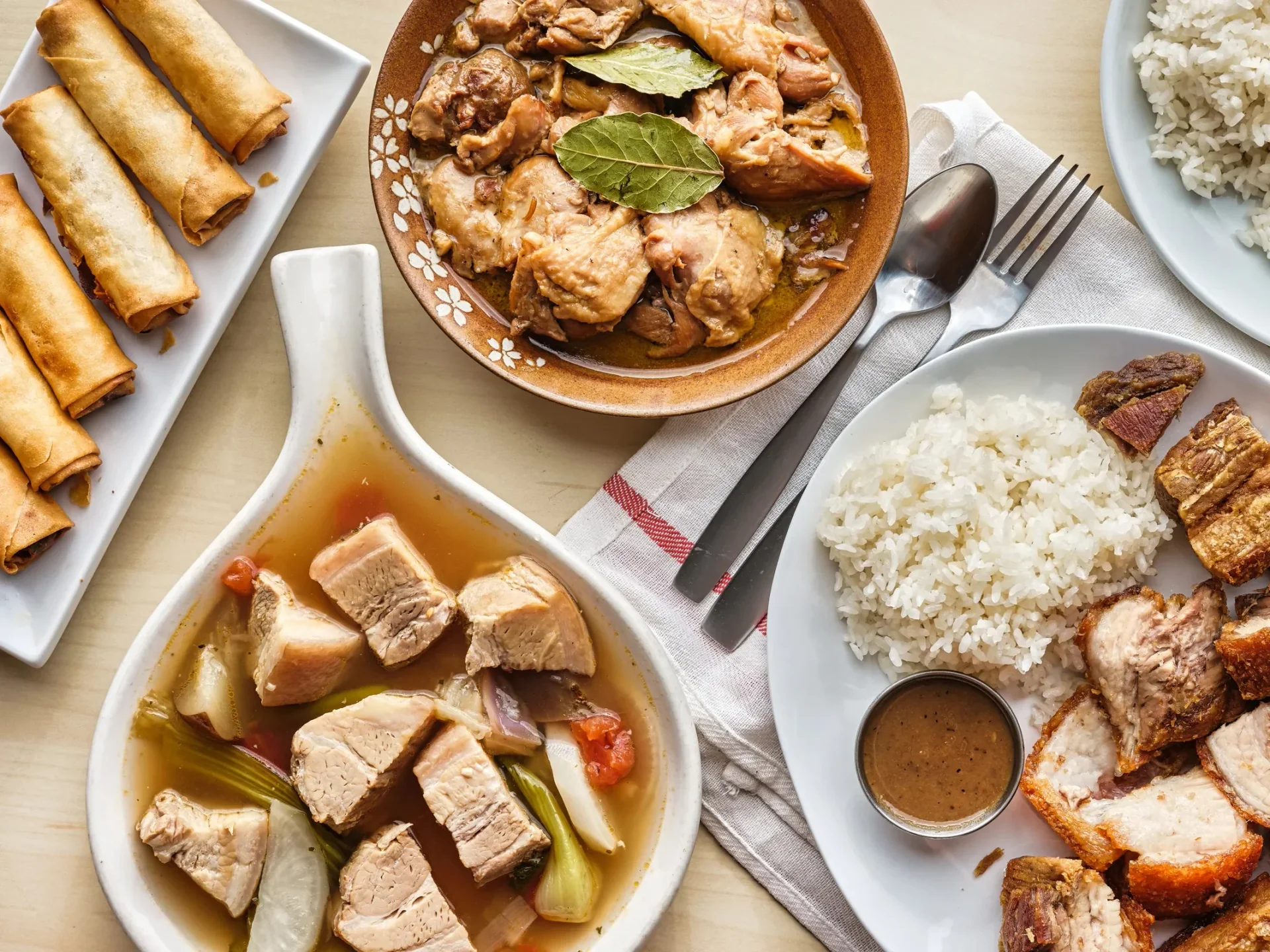
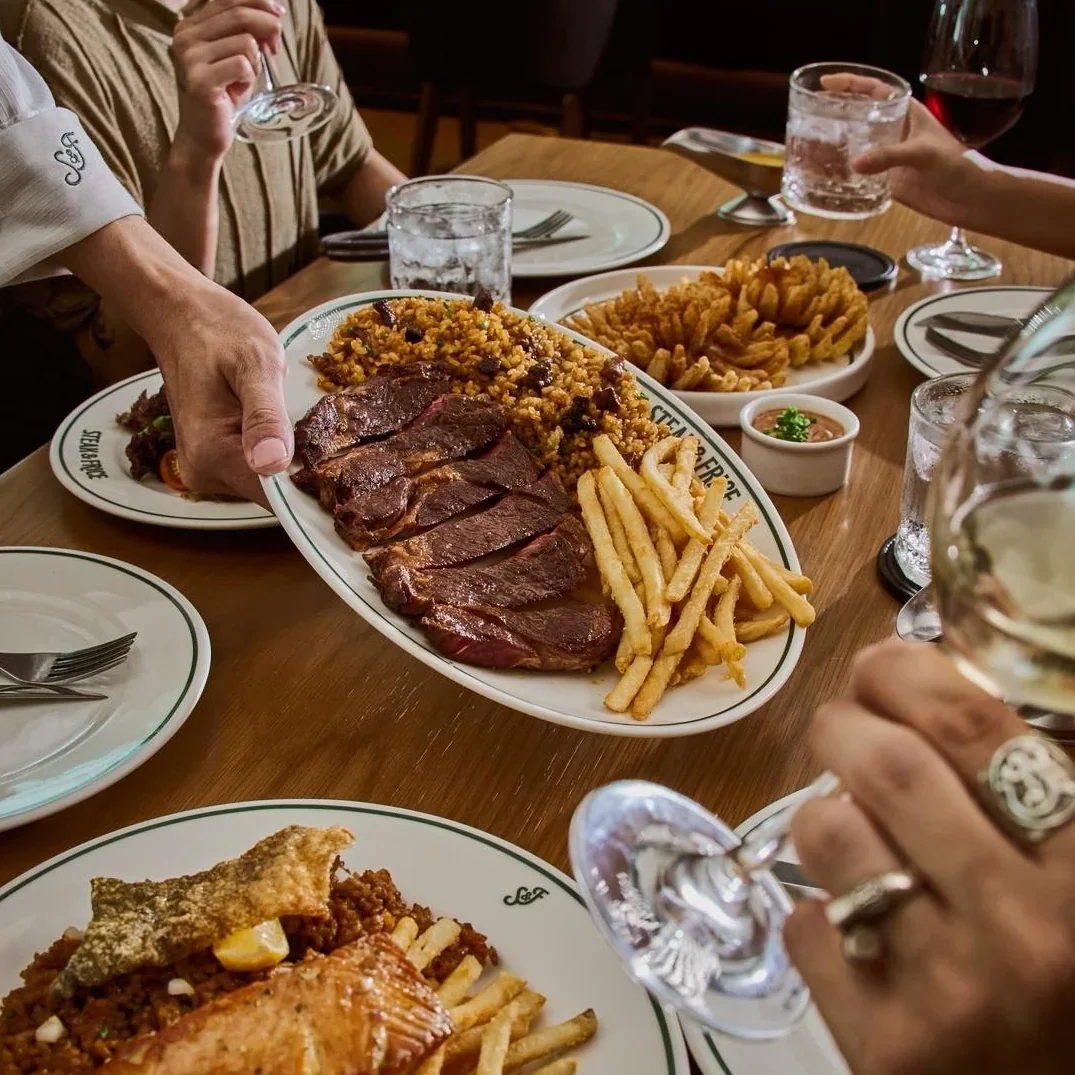
Adobo to Kamayan (Photo by engoo.com)
Adobo: Often referred to as the unofficial national dish, it consists of meat (usually chicken or pork) braised in a mixture of vinegar, soy sauce, garlic, and peppercorns.
Sinigang: A soul-warming sour soup packed with vegetables and protein (shrimp, fish, or pork). Its tamarind-based broth is the ultimate Filipino comfort food.
Lechon: A whole roasted pig with glass-like crispy skin. It is the centerpiece of any major celebration (fiesta).
When and How to Eat: The Spirit of Community
The "Merienda": Filipinos love to eat. Beyond the standard three meals, the Merienda (afternoon snack) is a sacred cultural ritual, often featuring rice cakes (Kakanin) or savory noodles.
The Boodle Fight: For a truly immersive experience, look for a "Boodle Fight." Originating from military mess halls, food is spread across long banana leaves, and everyone eats together using their bare hands—a practice known as Kamayan.
Where to Find the Best Bites (2026 Trends)
Based on current culinary rankings and local favorites:
Toyo Eatery (Manila): A staple on Asia’s 50 Best Restaurants list, where Chef Jordy Navarra reimagines local ingredients through a modern, fine-dining lens.
Sentro 1771 (Makati): Famous for its "Corned Beef Sinigang," it’s the go-to spot for elevated Filipino classics.
Cebu City: Still widely regarded as the "Lechon Capital of the World." No trip to the Philippines is complete without tasting Cebu-style roasted pig.
Poblacion (Makati): This trendy neighborhood is the heart of Manila's street food scene, perfect for tasting Balut (fertilized duck egg) or Isaw (grilled skewers) in a vibrant, urban setting.
Discover More

Related Articles

What's New