Essential Cities You Can’t Miss on Your First Trip to South Korea
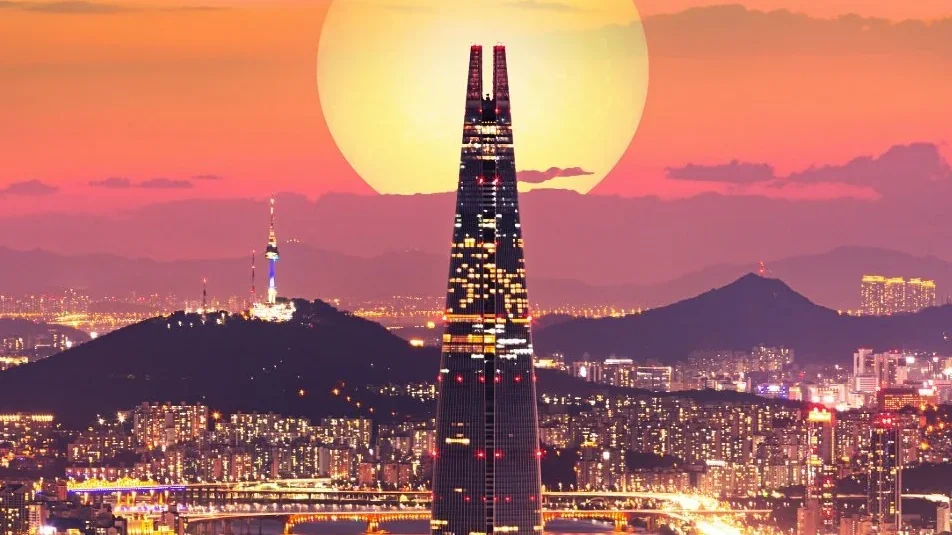
South Korea is a captivating blend of ancient tradition and futuristic innovation. For a first-time visitor, the sheer number of districts and attractions can be overwhelming. To help you plan a balanced trip, here are the top five essential destinations that capture the soul of the country.
1. Seoul: The Dynamic Capital
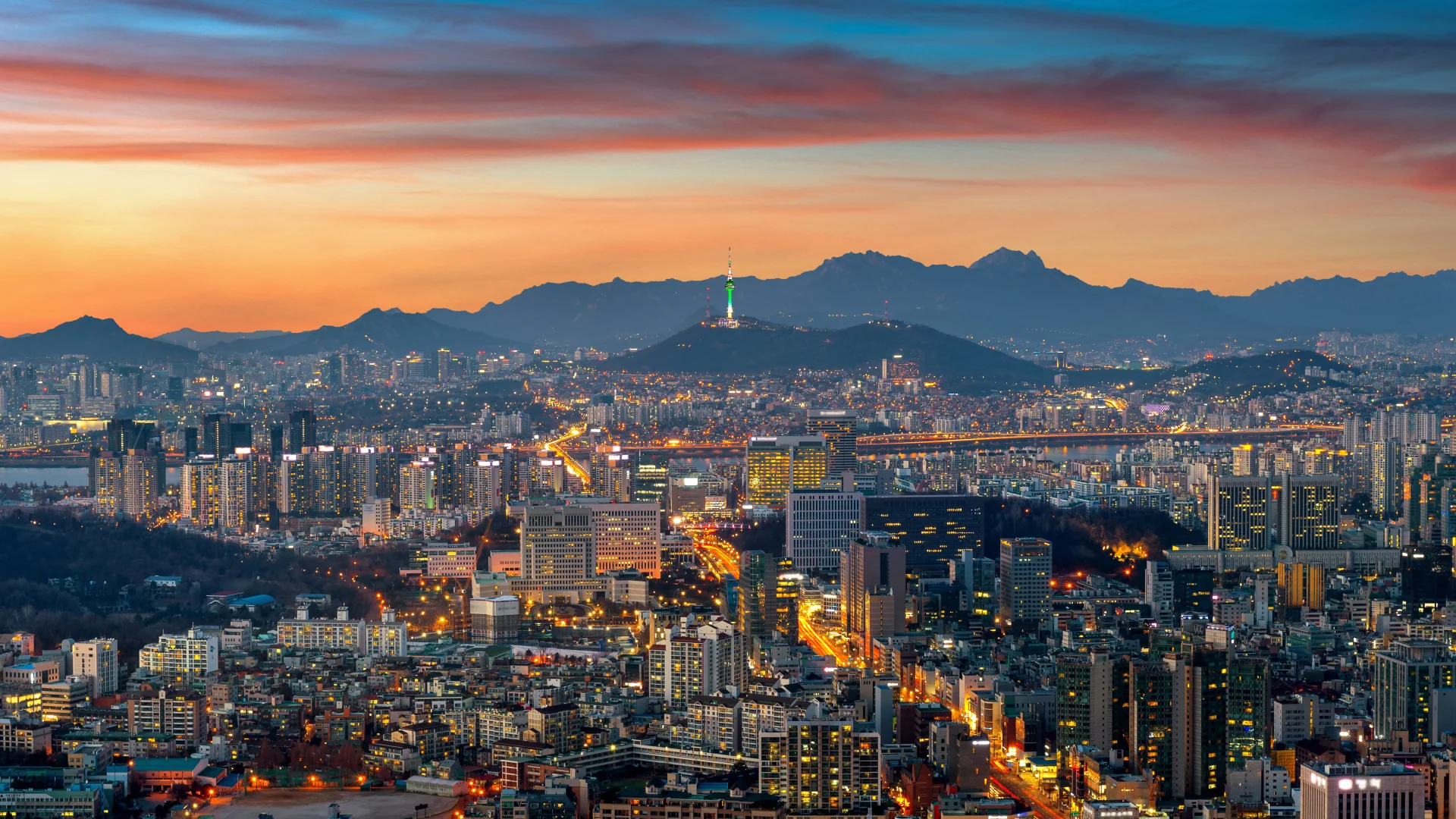
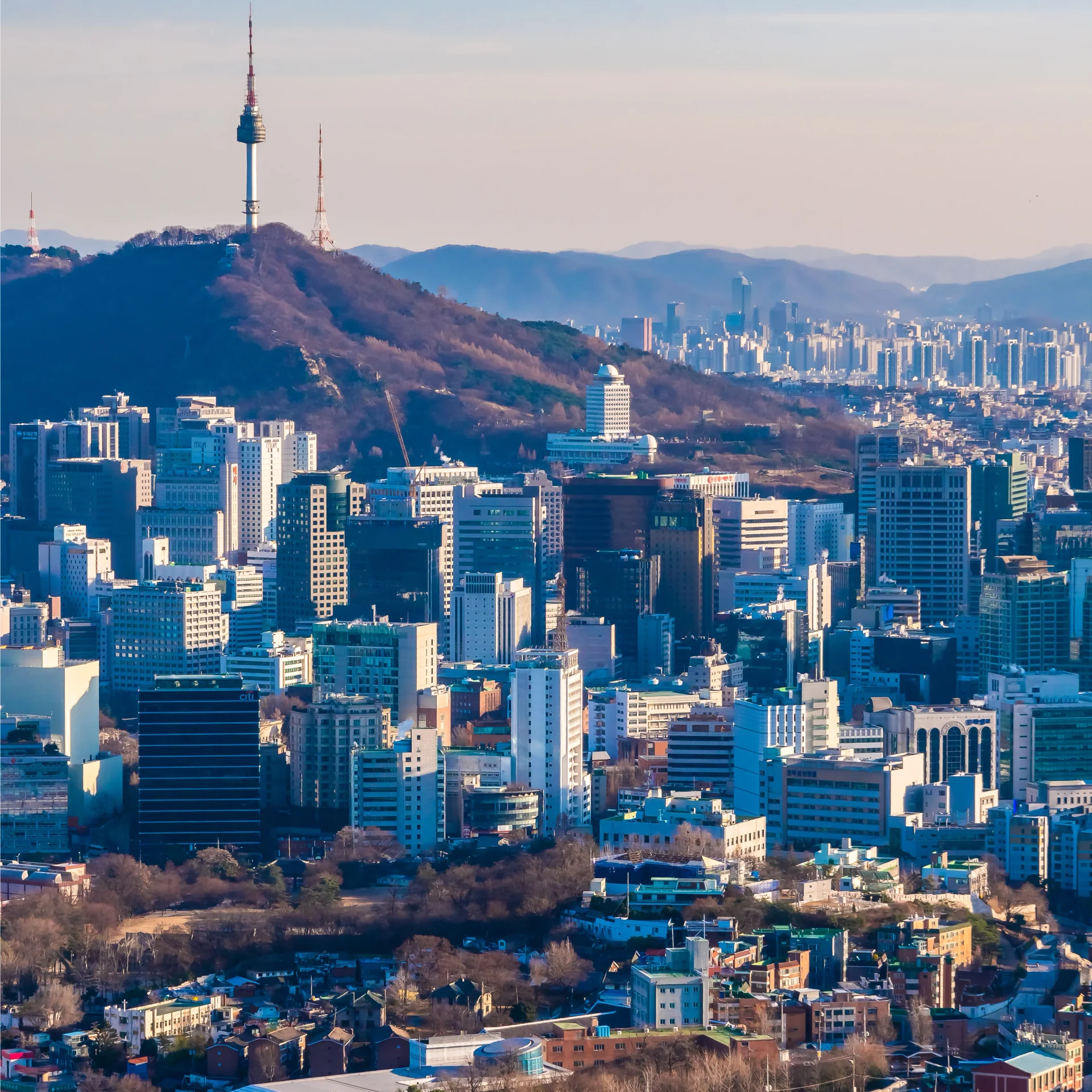
Seoul (Photo by Pexels/tawatchai07)
Seoul is often the starting point for any traveler, offering a dense concentration of history, shopping, and nightlife.
Gyeongbokgung Palace: The largest and grandest of the "Five Grand Palaces." Visit in the morning to catch the Changing of the Guard ceremony at 10:00 AM or 2:00 PM.
Pro Tip: Renting a Hanbok (traditional dress) allows you to enter the palace grounds for free and makes for incredible photos.
Bukchon Hanok Village: A living neighborhood with hundreds of traditional Korean houses dating back to the Joseon Dynasty. It’s perfect for a quiet afternoon walk, but remember it is a residential area—stay respectful and keep noise levels low.
Myeongdong & Hongdae: Myeongdong is the mecca for skincare and street food (try the tteokbokki and egg bread), while Hongdae is the heart of youth culture, famous for its live busking, indie clubs, and trendy fashion boutiques.
2. Busan: The Coastal Metropolis
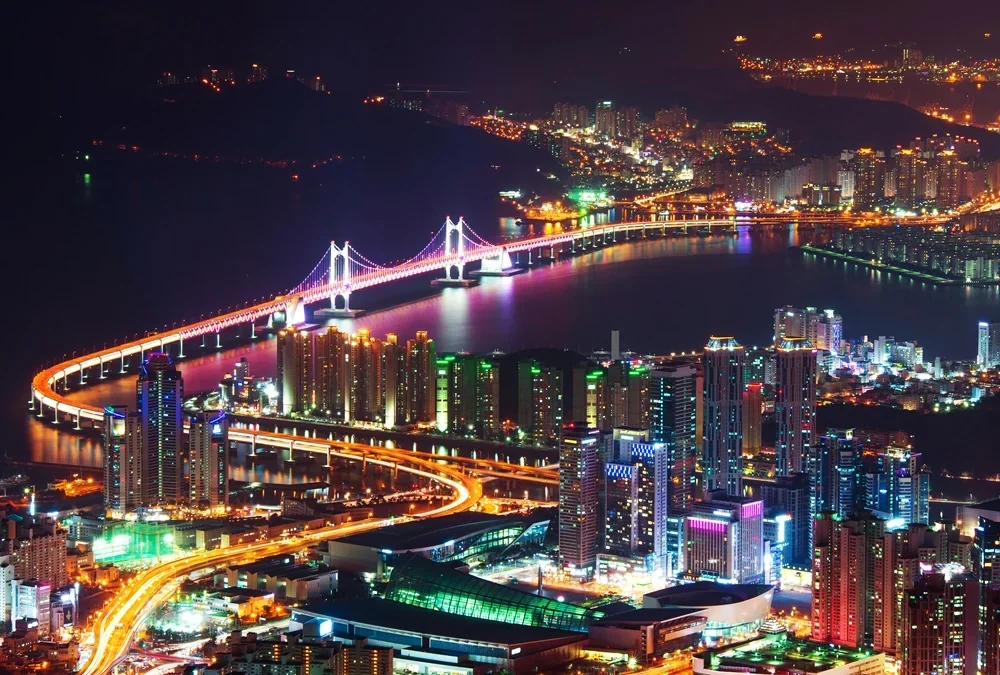
Busan (Photo by pexels/tawatchai07)
Located on the southeastern tip of the peninsula, Busan offers a more relaxed, maritime vibe compared to the fast-paced life in Seoul.
Gamcheon Culture Village: Known as the "Santorini of Korea," this former refugee village is now a vibrant art installation featuring colorful hillside houses, murals, and sculptures.
Haeundae Beach: Korea’s most famous beach. It’s not just for swimming; the nearby Haeundae Blueline Park offers a scenic "Beach Train" and "Sky Capsule" ride along the rocky coastline.
Haedong Yonggungsa Temple: Unlike most Korean temples tucked away in mountains, this one is perched dramatically on the edge of the ocean, offering stunning sunrise views.
3. Gyeongju: The "Museum Without Walls"
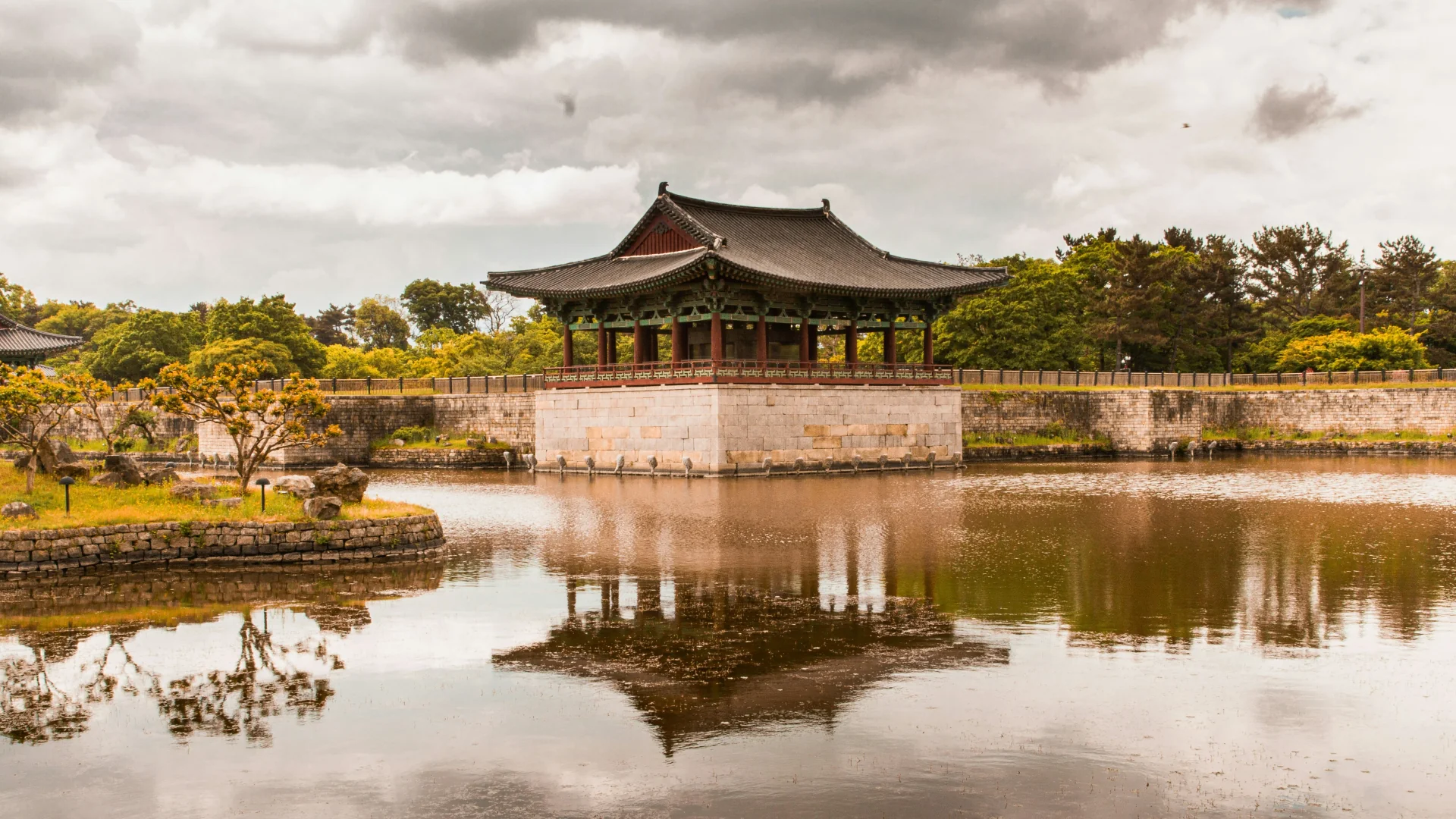
Gyeongju (Photo by unsplash/Domenico Gentile)
If you love history, Gyeongju is unmissable. It served as the capital of the Silla Kingdom for nearly 1,000 years.
Bulguksa Temple: A UNESCO World Heritage site and a masterpiece of Buddhist art. It’s particularly beautiful during the autumn foliage season.
Daereungwon Tomb Complex: Large, grassy mounds that are actually the ancient burial sites of Silla kings and queens. You can even enter the Cheonmachong Tomb to see excavated gold artifacts.
Donggung Palace and Wolji Pond: A secondary palace site that is most spectacular at night, when the traditional buildings are perfectly reflected in the illuminated pond.
4. Jeju Island: Korea’s Natural Paradise
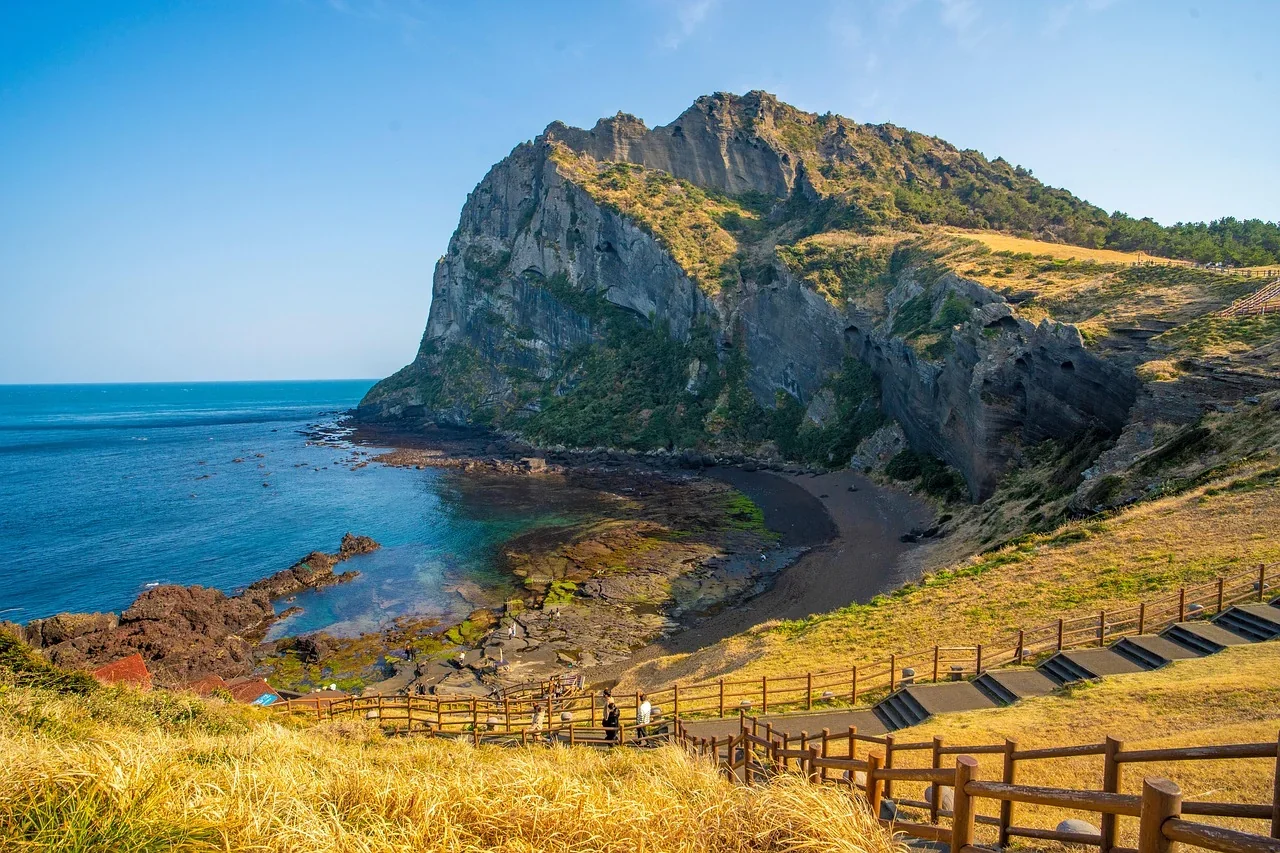
Jeju Island (Photo by pixabay/docujeju)
A short flight from Seoul takes you to Jeju, a volcanic island famous for its rugged landscapes and unique local culture.
Seongsan Ilchulbong (Sunrise Peak): A massive tuff cone that rose from the sea 5,000 years ago. The hike to the top takes about 20-30 minutes and provides panoramic views of the island.
Jeju Haenyeo: Look out for the "Sea Women" who dive without oxygen tanks to harvest seafood. There is a museum dedicated to their history and frequent demonstrations at Seongsan.
Hallasan National Park: For outdoor enthusiasts, hiking the dormant volcano at the center of the island offers a challenging but rewarding day trip.
5. The DMZ (Demilitarized Zone)
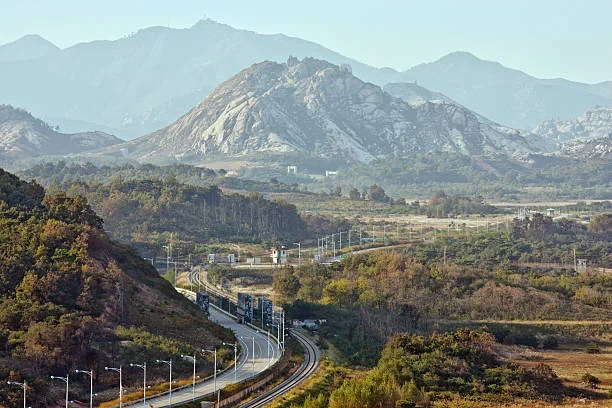
DMZ South Korea & North Korea (Photo by istockphoto/PictureLake)
For a sobering look at modern history, a day trip to the border between North and South Korea is a bucket-list experience for many.
The Experience: You can visit the 3rd Infiltration Tunnel, see into North Korea from the Dora Observatory, and visit the Imjingak Park.
Important Note: You must book a tour through an authorized travel agency, and you’ll need to bring your passport for security checks. Tours can be cancelled on short notice depending on the political climate.
Essential Travel Tips for 2026
Apps to Download: Google Maps is notoriously unreliable in Korea. Download Naver Map or KakaoMap for navigation, and Papago for the most accurate translations.
Connectivity: Purchase a T-money card at any convenience store upon arrival. It’s an essential reloadable card used for all subways, buses, and even some taxis and stores.
Safety & Water: South Korea is incredibly safe, but note that while tap water is technically safe, most locals prefer to drink filtered or bottled water.
Related Articles