Home / Seoul / Ultimate Guide
Best Places to Visit in Seoul
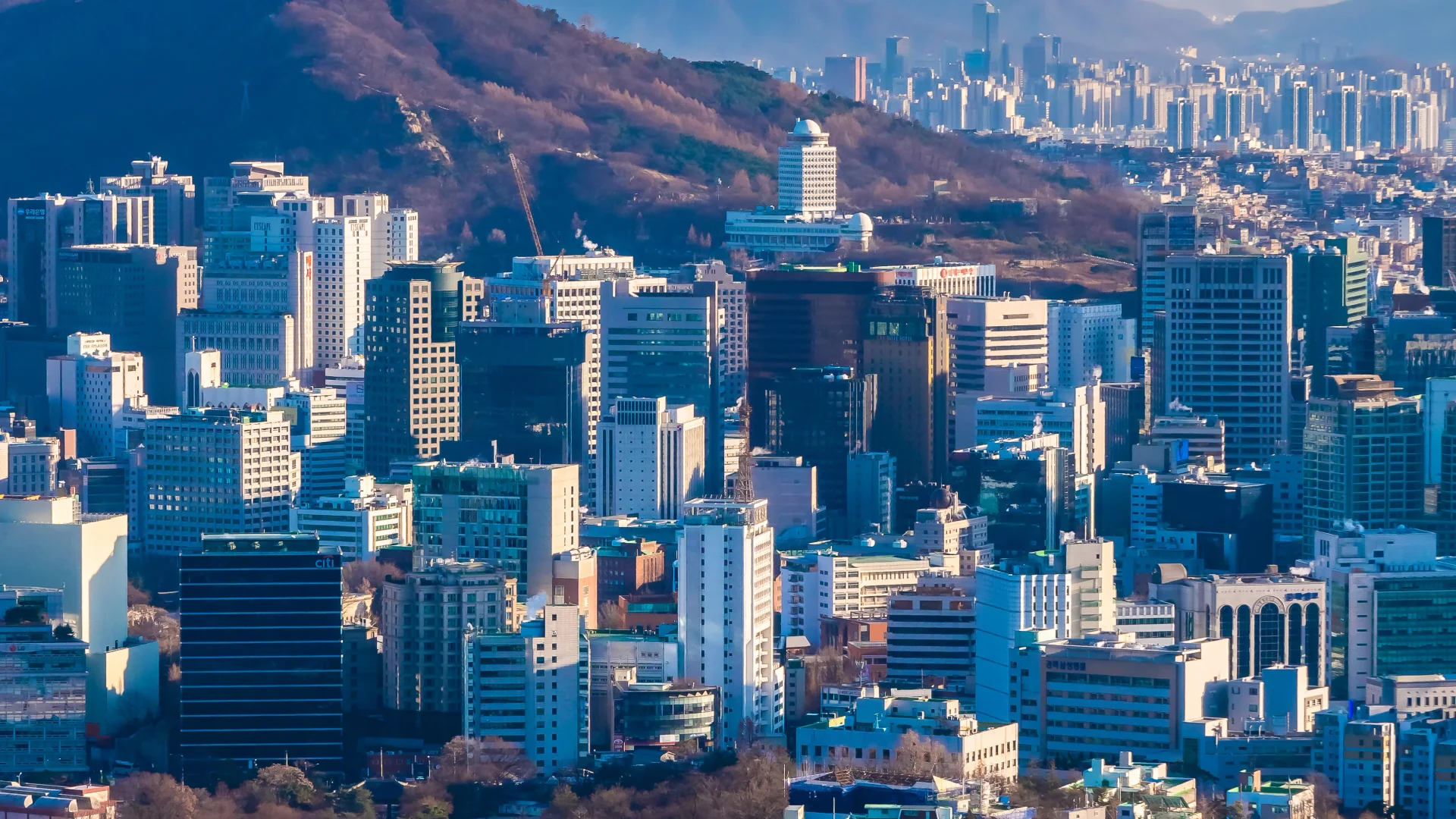
Planning a trip to South Korea’s capital in 2026? Seoul has evolved into a global trendsetter where 14th-century palaces sit in the shadow of glass skyscrapers. This guide covers the must-see attractions. We’ve curated the ultimate list of Seoul’s top destinations to help you navigate the city’s unique "dualism" of old and new.
Gyeongbokgung Palace
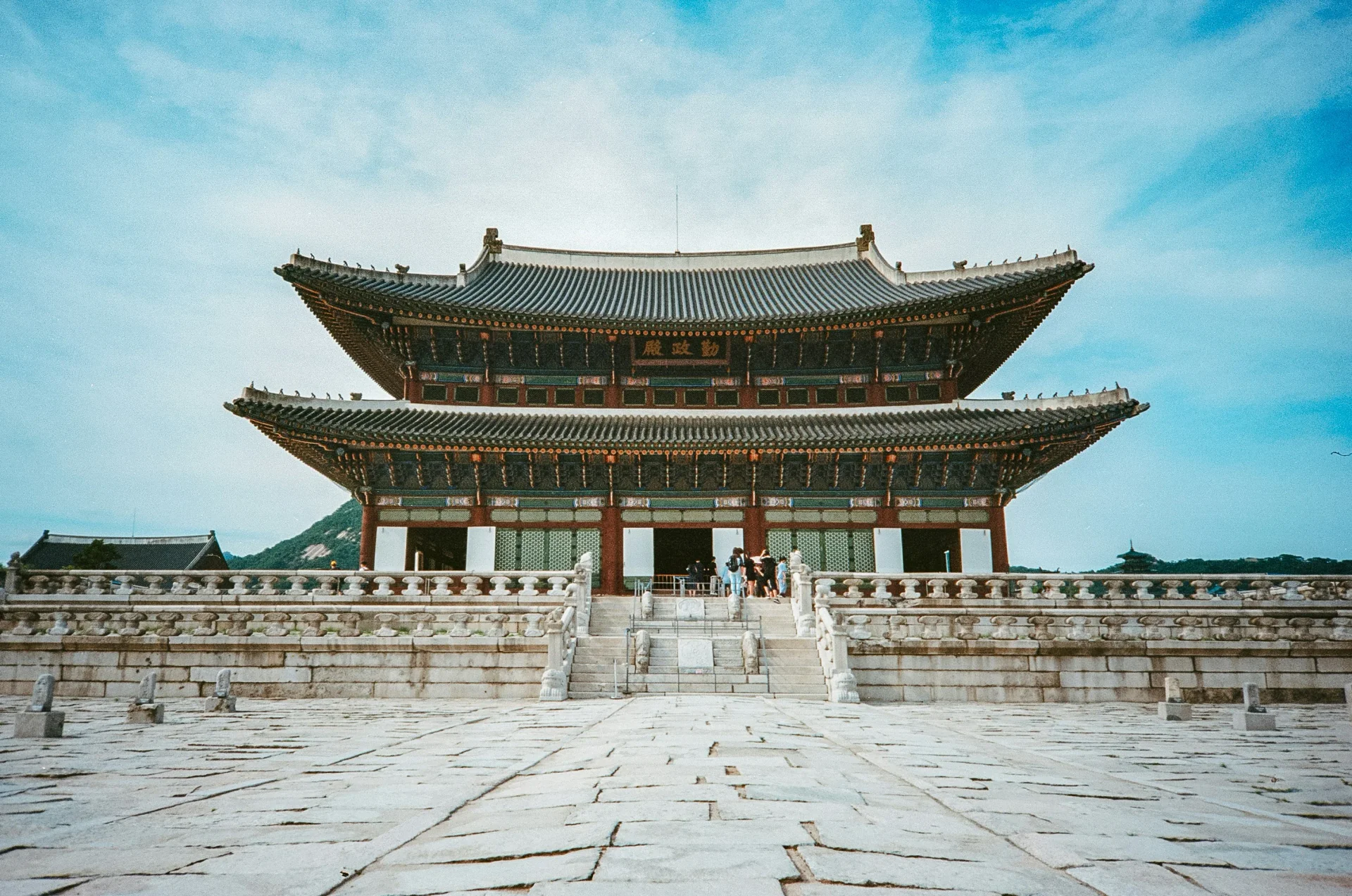
Gyeongbokgung Palace (Photo by unsplash/Daniel Bernard)
As the largest and most iconic of Seoul’s five grand palaces, Gyeongbokgung Palace (the "Palace Greatly Blessed by Heaven") stands as a majestic testament to the Joseon Dynasty's 600-year legacy. Nestled against the dramatic backdrop of Bugaksan Mountain, this 14th-century landmark offers a stunning contrast between traditional stone pagodas and the surrounding modern glass skyscrapers. Visitors can witness the colorful Changing of the Guard ceremony at the Gwanghwamun Gate, explore the serene Gyeonghoeru Pavilion floating on its lotus pond, or take advantage of the popular local tradition: wearing a rented Hanbok (traditional dress) to receive free admission and capture the ultimate timeless photo.
Gyeongbokgung Palace
161 Sajik-ro, Jongno District, Seoul, South Korea
N Seoul Tower
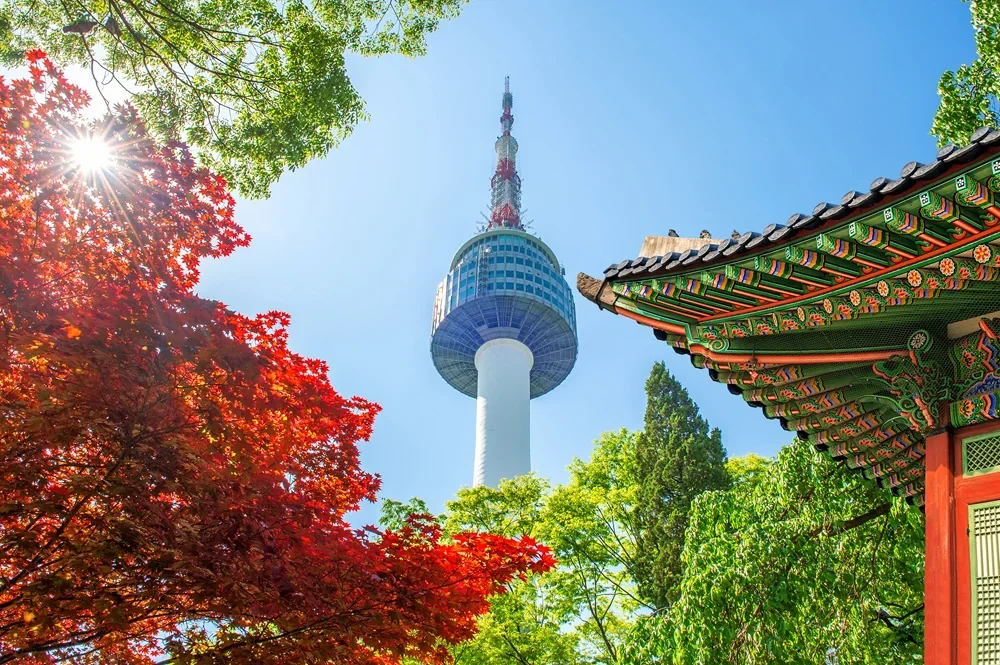
N Seoul Tower (Photo by freepik/tawatchai07)
N Seoul Tower (often called Namsan Tower) is the city’s most recognizable skyline icon and a premier destination for 360-degree panoramic views. Standing 236 meters tall, the tower is a multifaceted cultural hub where visitors can enjoy fine dining at the revolving n.GRILL restaurant or take a scenic ride on the Namsan Cable Car. It is perhaps most famous for its "Locks of Love" roof terrace, where thousands of colorful padlocks symbolize eternal commitment against a backdrop of the Han River and sprawling city lights. For a modern Seoul experience, time your visit for sunset to watch the tower’s LED lights change color—a digital art display that also serves as a real-time indicator of the city’s air quality.
N Seoul Tower
105 Namsangongwon-gil, Yongsan District, Seoul, South Korea
Changdeokgung
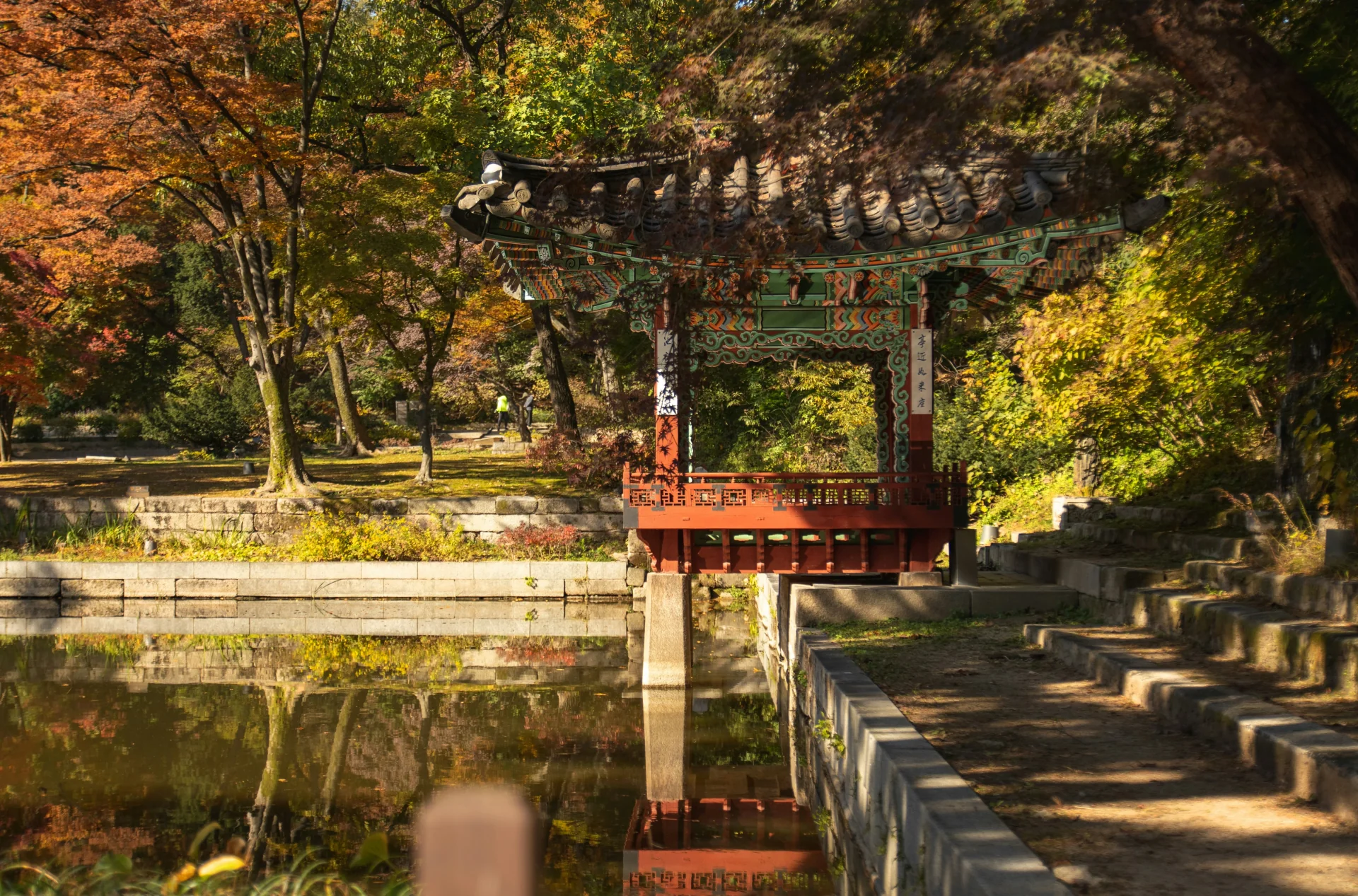
Changdeokgung (Photo by unsplash/Inhyeok Park)
As the only palace in Seoul designated as a UNESCO World Heritage Site, Changdeokgung is celebrated for its masterful harmony with the natural landscape. Unlike the symmetrical layout of other royal residences, this 15th-century "Palace of Illustrious Virtue" was designed to follow the hilly topography of the land, making it the most well-preserved example of authentic Korean palace architecture. The crown jewel of the complex is the Secret Garden (Huwon), a restricted woodland oasis featuring serene lotus ponds, colorful pavilions, and 300-year-old trees once reserved exclusively for the royal family. Whether you are exploring the blue-tiled roof of the King’s council hall or wandering the tranquil garden paths, Changdeokgung offers a peaceful, poetic escape into Korea’s royal past.
Changdeokgung
99 Yulgok-ro, Jongno District, Seoul, South Korea
Bukchon Hanok Village
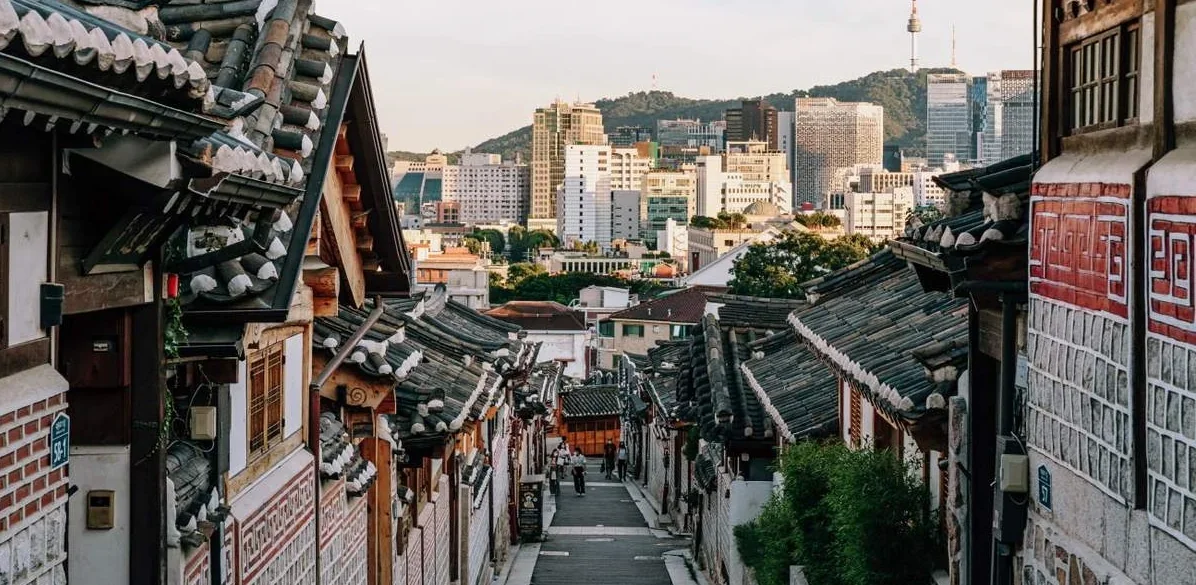
Bukchon Hanok Village (Photo by Klook)
Bukchon Hanok Village is a living museum that preserves 600 years of Seoul's history through its hundreds of traditional "hanok" houses. Once the residential quarter for high-ranking officials of the Joseon Dynasty, this hillside neighborhood remains an active community where visitors can wander through narrow, winding alleys to see elegant tiled roofs and stone walls. For the best experience, rent a Hanbok to take photos at the "Eight Scenic Views" or relax in a converted tea house with a view of the modern N Seoul Tower in the distance. Note that because this is a residential area, a tourist curfew is in effect from 5:00 PM to 10:00 AM to ensure peace for the locals, making a midday visit the perfect time to explore.
Bukchon Hanok Village
Gyedong-gil, Jongno District, Seoul, South Korea
National Museum of Korea
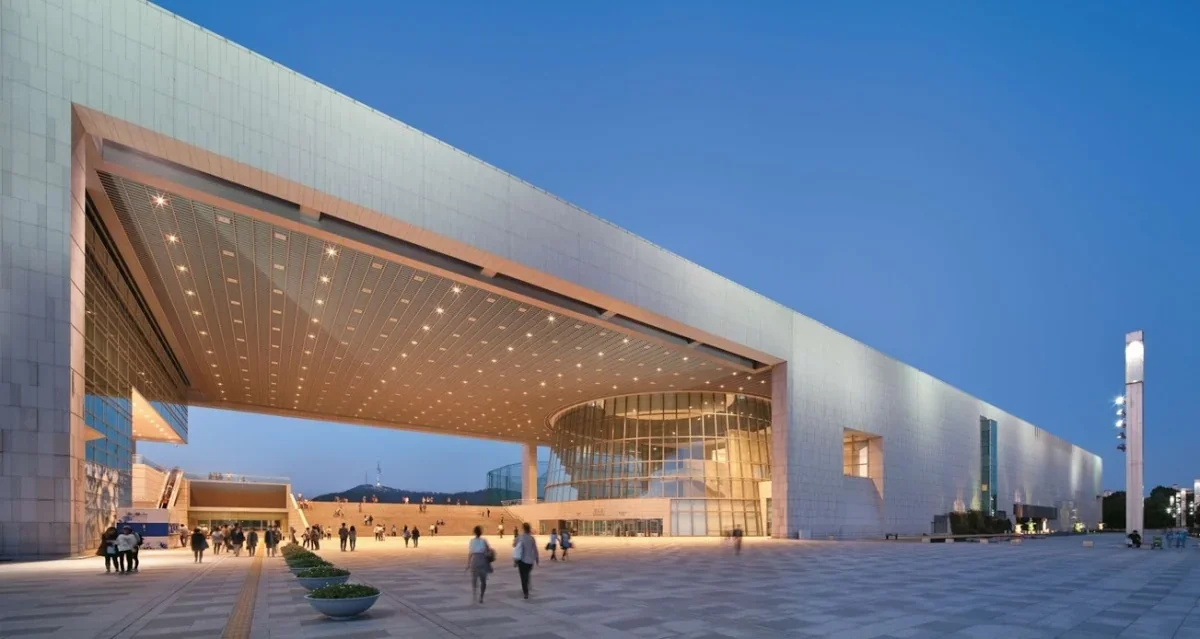
National Museum of Korea (Photo by artsandculture.google)
The National Museum of Korea in Yongsan is the country’s flagship cultural institution and one of the largest museums in the world, housing over 420,000 artifacts that span from the Paleolithic Age to the modern era. The museum’s striking contemporary architecture is designed to harmonize with the surrounding nature, featuring a "Mirror Pond" and a frame-like open plaza that perfectly captures the view of N Seoul Tower. Inside, you can explore six permanent galleries for free, with highlights including the world-renowned Pensive Bodhisattva statues in the "Room of Quiet Contemplation" and the towering Ten-story Stone Pagoda of Gyeongcheonsa Temple. In 2026, the museum continues to be a favorite for travelers seeking a deep, immersive journey into Korean identity through its blend of ancient treasures and cutting-edge digital exhibitions.
National Museum of Korea
137 Seobinggo-ro, Yongsan District, Seoul, South Korea
Cheonggyecheon
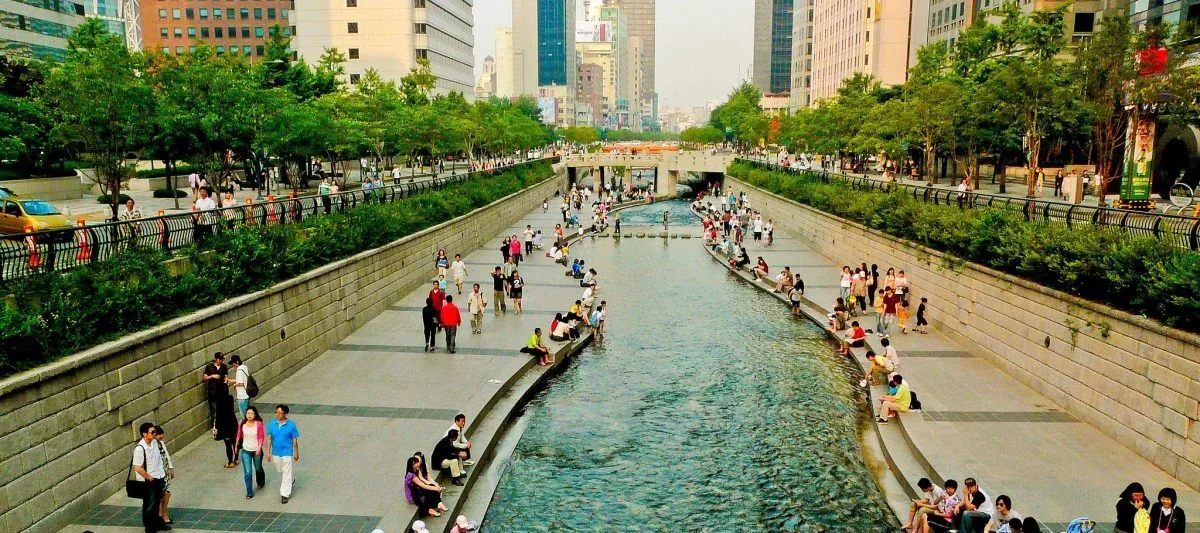
Cheonggyecheon Stream (Photo by tourkekorea.net)
Cheonggyecheon Stream is a stunning example of modern urban renewal that transformed a former elevated highway into a lush, sunken pedestrian oasis. This eco-friendly waterway sits nearly five meters below street level, providing a tranquil escape where the sounds of the city are replaced by the gentle rush of small waterfalls and the chirping of local birds. The stream begins at Cheonggye Plaza—marked by the iconic "Spring" spiral sculpture—and passes under 22 uniquely designed bridges as it winds toward the Han River. It is a favorite spot for evening strolls when the stone pathways are beautifully illuminated, and it serves as the vibrant centerpiece for seasonal events like the Seoul Lantern Festival, where hundreds of glowing sculptures float on the water.
Cheonggyecheon
Jongno District, Seoul, South Korea
War Memorial of Korea
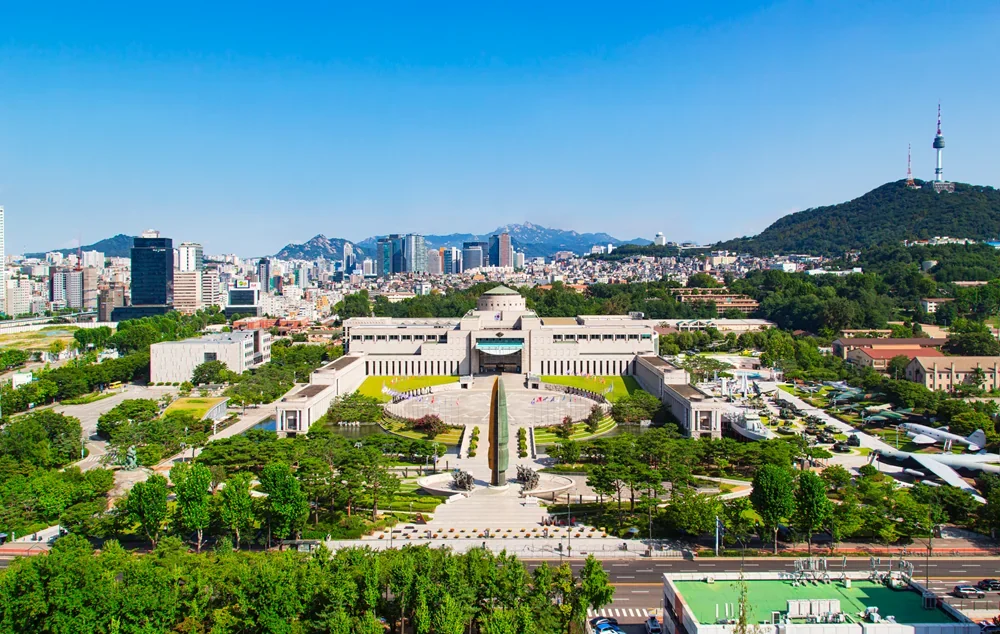
War Memorial of Korea (Photo by www.warmemo.or.kr:8443)
The War Memorial of Korea is a profound and massive complex dedicated to the military history of the peninsula. More than just a museum, it serves as a solemn tribute to the sacrifices made during the Korean War, featuring the iconic Statue of Brothers and the Wall of Remembrance, which lists the names of over 200,000 fallen soldiers from South Korea and UN participating nations. The indoor galleries house over 13,000 artifacts—including a life-sized Turtle Ship—while the sprawling outdoor exhibition area allows visitors to walk among over 70 large-scale tanks, aircraft, and missiles. Entry to the permanent exhibitions is free, making it an essential, high-impact stop for anyone looking to understand the resilience and history of modern South Korea.
War Memorial of Korea
29 Itaewon-ro, Yongsan District, Seoul, South Korea
Namdaemun Market
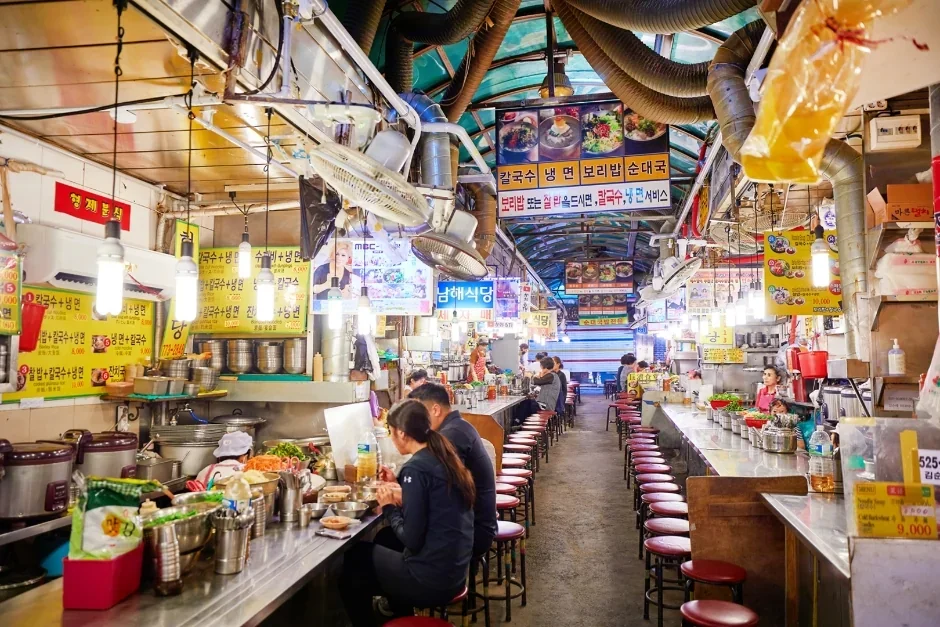
Namdaemun Market (Photo by Visit Korea)
As the oldest and largest traditional marketplace in South Korea, Namdaemun Market is a sprawling, 24-hour sensory explosion that has served as the heart of Seoul’s commerce for over 600 years. With more than 10,000 stalls and shops, it is the ultimate destination for "treasure hunting," offering everything from affordable children’s clothing and mountain gear to authentic Korean souvenirs at wholesale prices. The market is world-famous for its specialized food alleys, where you can rub elbows with locals over steaming bowls of handmade knife-cut noodles in Kalguksu Alley or try the market's legendary vegetable-filled Hotteok (savory pancakes). Located just steps from the historic Sungnyemun Gate, Namdaemun offers a gritty, vibrant, and deeply authentic glimpse into the daily life of Seoul that contrasts perfectly with the polished department stores of nearby Myeongdong.
Namdaemun Market
21 Namdaemunsijang 4-gil, Jung District, Seoul, South Korea
Deoksugung Palace
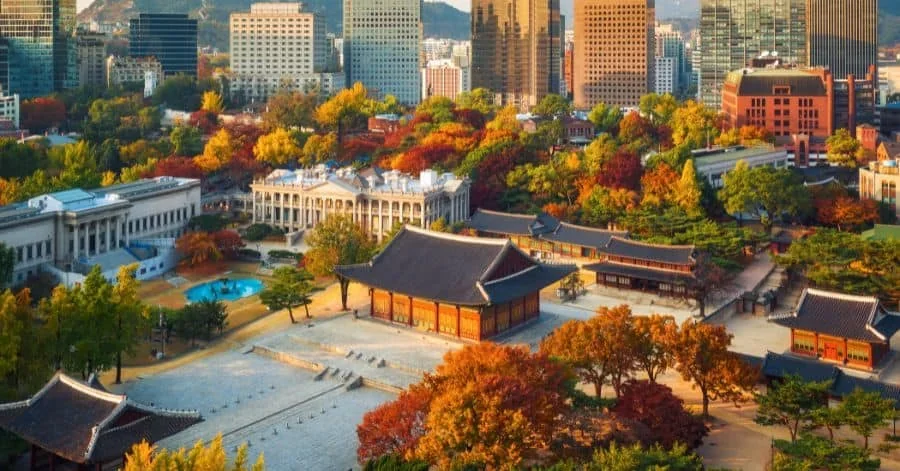
Deoksugung Palace (Photo by www.ivisitkorea.com)
Unique for its architectural "dualism," Deoksugung Palace is the only royal compound in Seoul where traditional Korean pavilions stand alongside grand, Neo-Classical Western stone buildings. Located at one of the city's busiest intersections across from Seoul City Hall, this "Palace of Virtuous Longevity" served as the primary imperial seat during the final years of the Joseon Dynasty and the brief Korean Empire. Visitors are often captivated by the contrast between the traditional Junghwajeon Hall and the European-style Seokjojeon Hall, which houses the Korean Empire History Museum. Beyond the palace gates, you can witness a more intimate version of the Changing of the Guard ceremony or take a romantic stroll along the famous Deoksugung Stone Wall Path, a scenic tree-lined road that is particularly spectacular during the autumn foliage season.
Deoksugung Palace
99 Sejong-daero, Jung District, Seoul, South Korea
Starfield Library
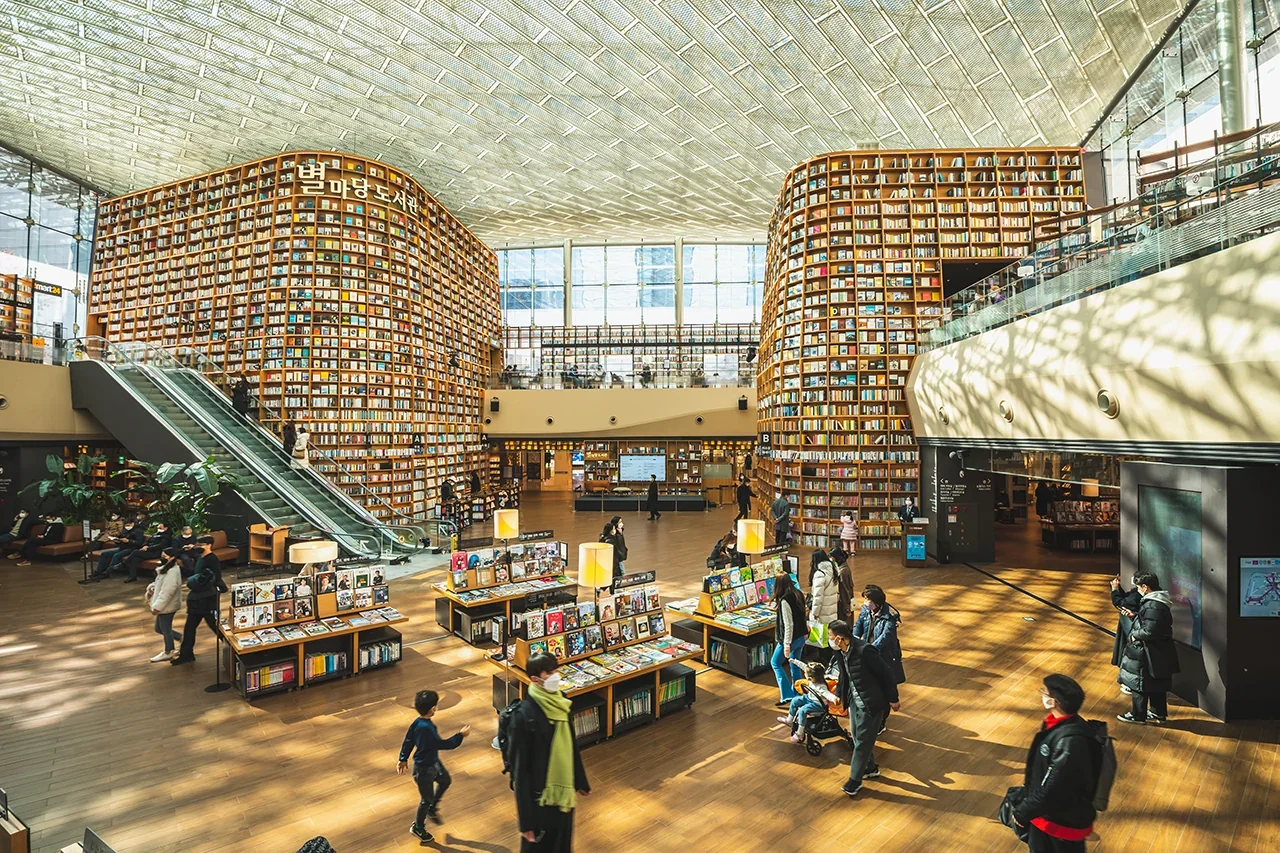
Starfield Library (Photo by english.seoul.go.kr)
Starfield Library is a futuristic, open-air literary space that has become one of Seoul’s most viral landmarks. The library is famous for its three towering, 13-meter-tall curved bookshelves that house over 50,000 books and magazines, creating a "cathedral of knowledge" under a soaring glass ceiling. While it serves as a public reading area where you can browse international titles or work at a desk with built-in outlets, it is best known as a premier photography spot—especially from the escalators that offer a perfect panoramic view of the architecture. Completely free to enter, the space also hosts seasonal art installations and digital light shows, making it a vibrant cultural hub that perfectly captures the high-energy, high-tech spirit of modern Seoul.
Starfield Library
Starfield Coex Mall
Myeongdong Shopping Street
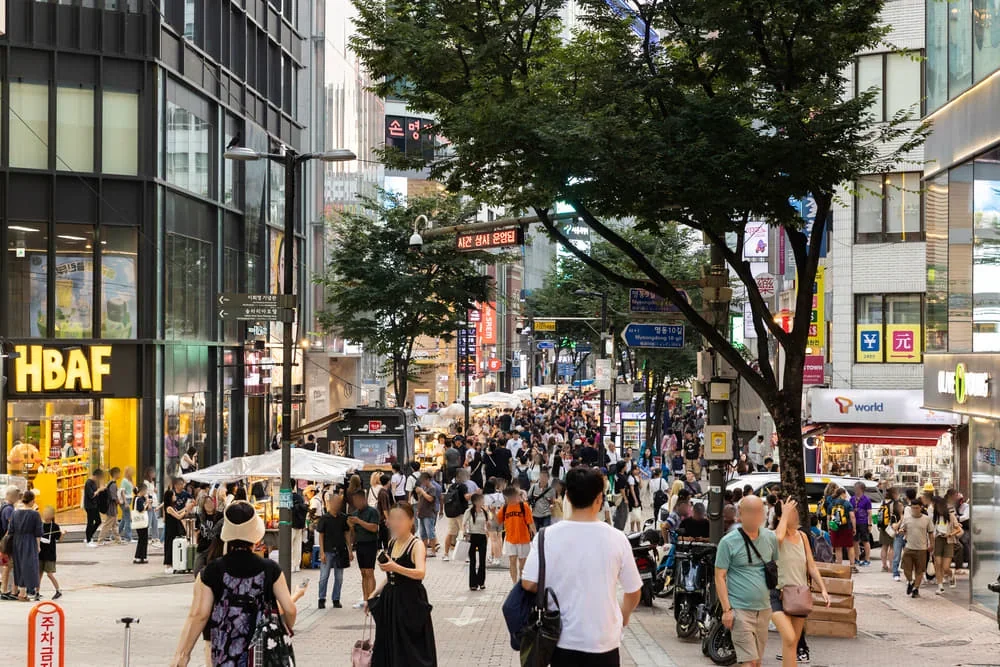
Myeongdong Shopping Street (Photo by english.visitseoul.net)
Myeongdong Shopping Street is a world-famous pedestrian district where global flagship stores meet a legendary street food culture. Known as the "K-beauty mecca," this vibrant neighborhood is packed with hundreds of skincare boutiques—including the massive Olive Young Myeongdong Town—offering everything from viral face masks to personalized color analysis. As the sun sets, the central lanes transform into a neon-lit night market where you can feast on iconic snacks like grilled lobster, tornado potatoes, and tteokbokki. Whether you are hunting for the latest K-fashion at the new Musinsa flagship, visiting the historic Myeongdong Cathedral, or catching the non-verbal NANTA kitchen comedy show, Myeongdong offers an electrifying, one-stop sensory experience that defines modern Seoul.
Myeongdong Shopping Street
1-5 Myeong-dong, Jung District, Seoul, South Korea
ADS PLACEMENT
Discover More
Related Articles