Kuala Lumpur’s Art Deco & Colonial Architecture Trail: A Walking Guide
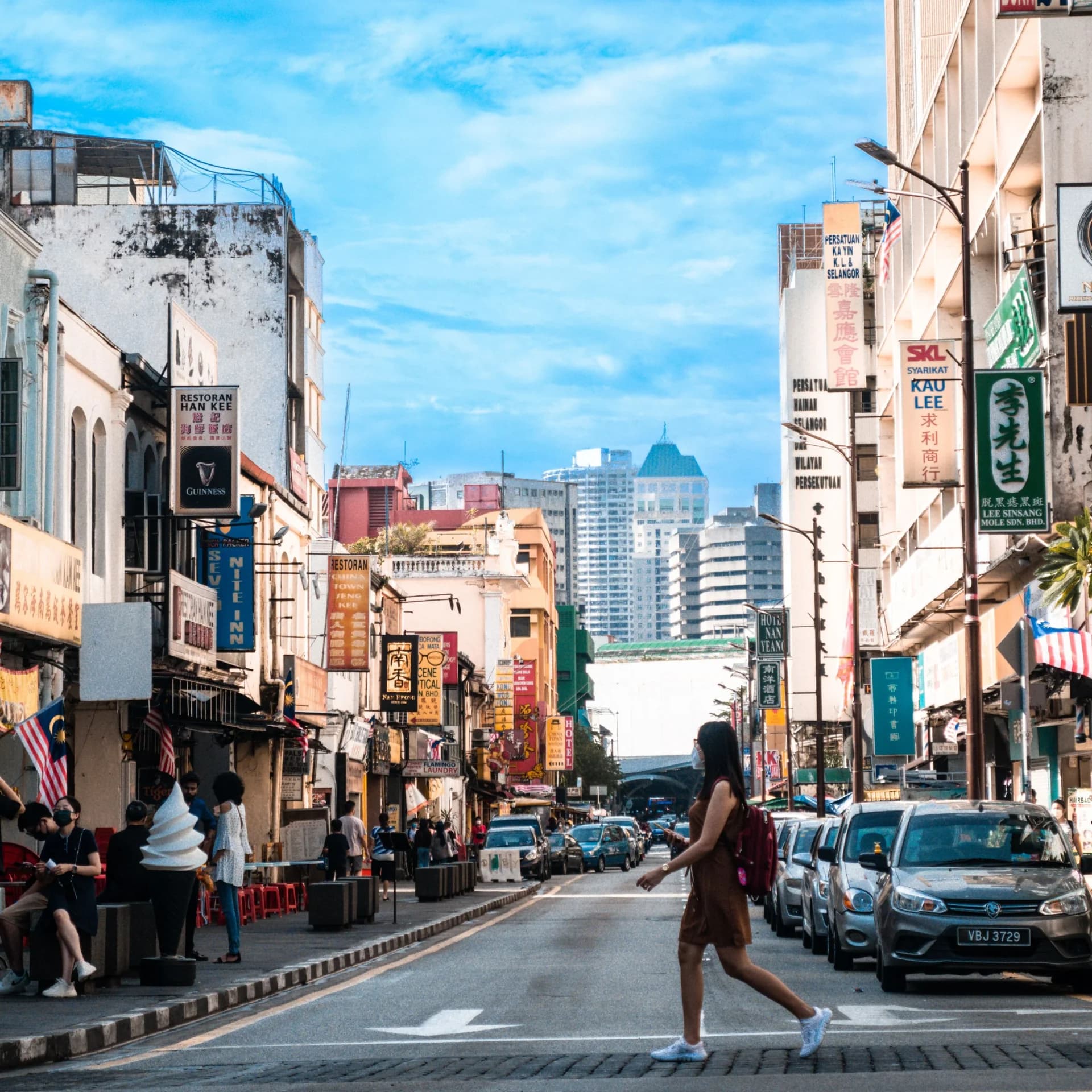
Long before glittering skyscrapers redefined Kuala Lumpur’s skyline, the city took shape through an eclectic mix of Moorish arches, Victorian neoclassicism, and sleek Art Deco lines. Exploring downtown KL on foot reveals a living museum where British colonial ambition met local craftsmanship, creating a distinct visual identity that still anchors the city's cultural heart.
This curated walking route takes you through six iconic architectural landmarks in central Kuala Lumpur, easily navigated within a single morning or afternoon.
1. Kuala Lumpur Railway Station
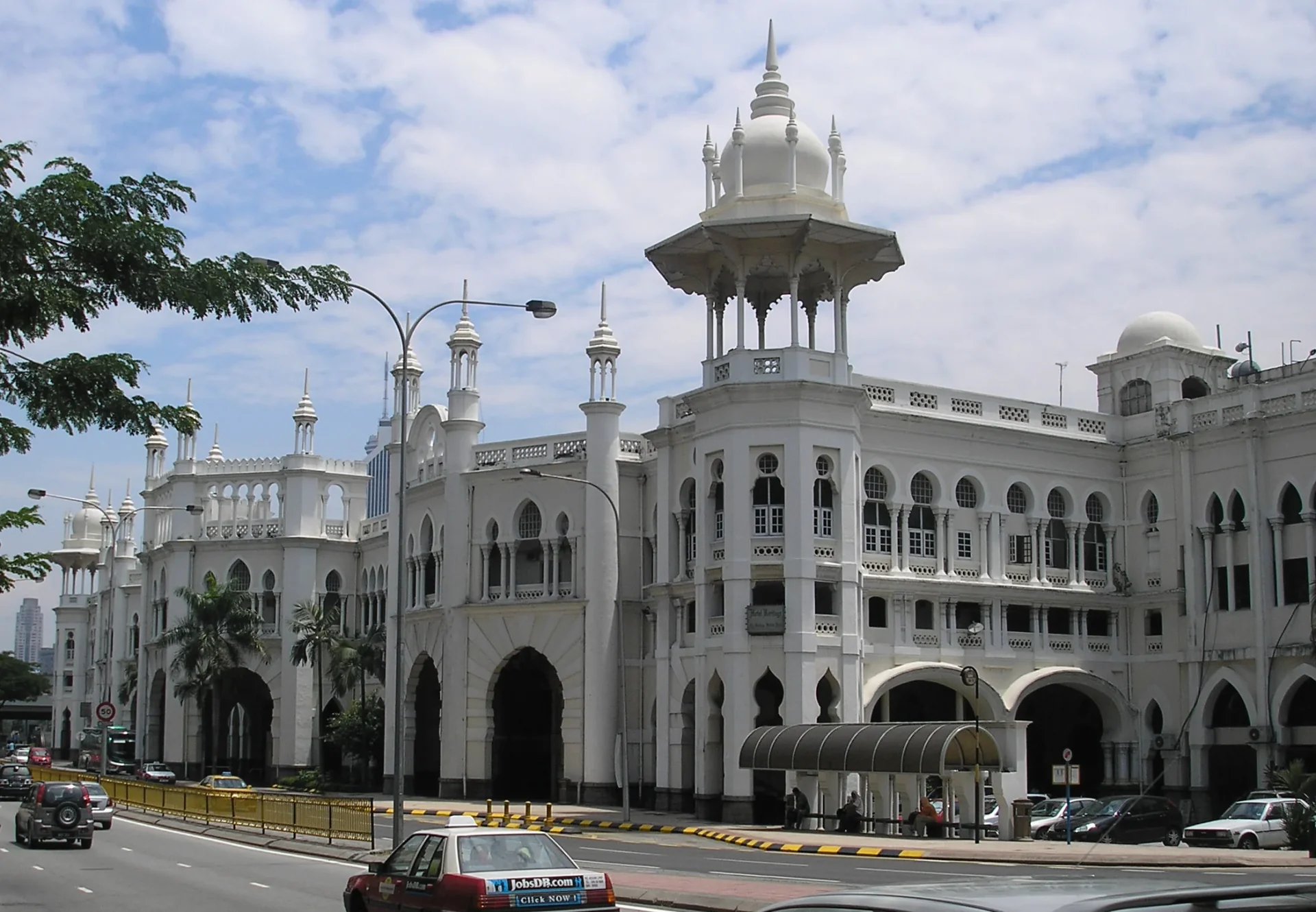
Kuala Lumpur Railway Station
Designed by British architect A.B. Hubback and completed in 1910, the Kuala Lumpur Railway Station stands as a masterpiece of Indo-Saracenic architecture. The building features plaster-plumed minarets, domed pavilions, and delicate horseshoe arches designed to blend North Indian Islamic motifs with Western railway engineering.
- Location: Jalan Sultan Hishamuddin
- Architectural Style: Neo-Moorish / Indo-Saracenic
- Nearest Transit: Pasar Seni Station / Kuala Lumpur KTM Station
- The Experience: Walking along the sheltered verandahs offers a quiet look at the intricate stone filigree and keyhole arches that once served as the primary gateway into the Malayan capital.
- Pro-Tip: Position yourself directly across the street near the Malayan Railway Administration Building to frame the entire facade against the backdrop of the modern city skyline.
2. National Textile Museum (Muzium Tekstil Negara)
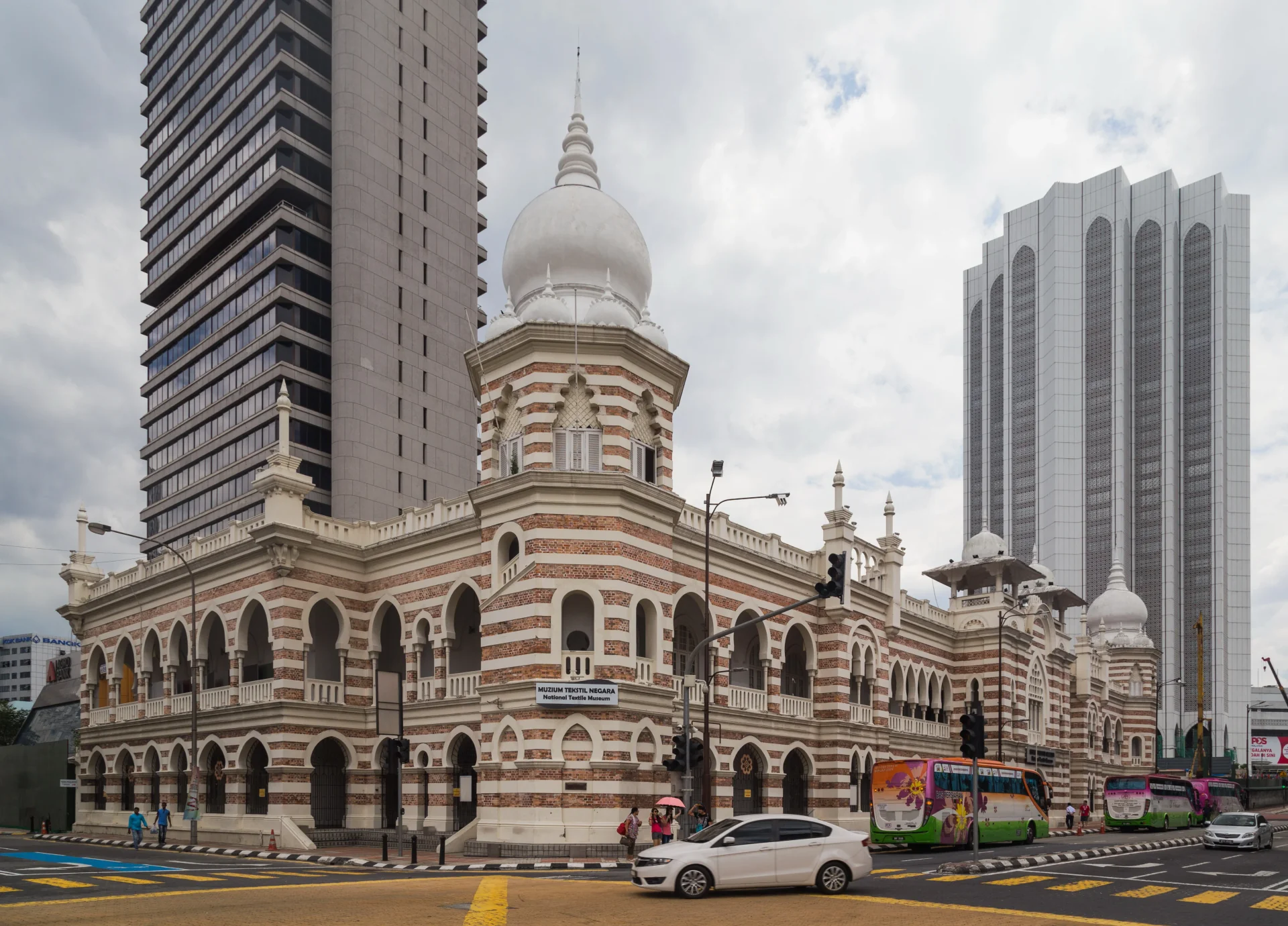
National Textile Museum (Muzium Tekstil Negara)
Occupying a prominent corner facing Merdeka Square, this 1905 structure showcases alternating bands of red brick and white plasterwork—often referred to as the "blood and bandage" style popular across the British Empire during the Edwardian era.
- Location: Jalan Raja, Merdeka Square
- Architectural Style: Indo-Saracenic
- Nearest Transit: Pasar Seni Station / Masjid Jamek Station
- The Experience: Inside, four main galleries exhibit traditional Malaysian textiles, hand-drawn batik, and royal heritage weaves (Songket), providing rich cultural context to the building's historic exterior.
- Pro-Tip: The museum is free to enter, offering an air-conditioned respite along the walking trail.
3. Sultan Abdul Samad Building
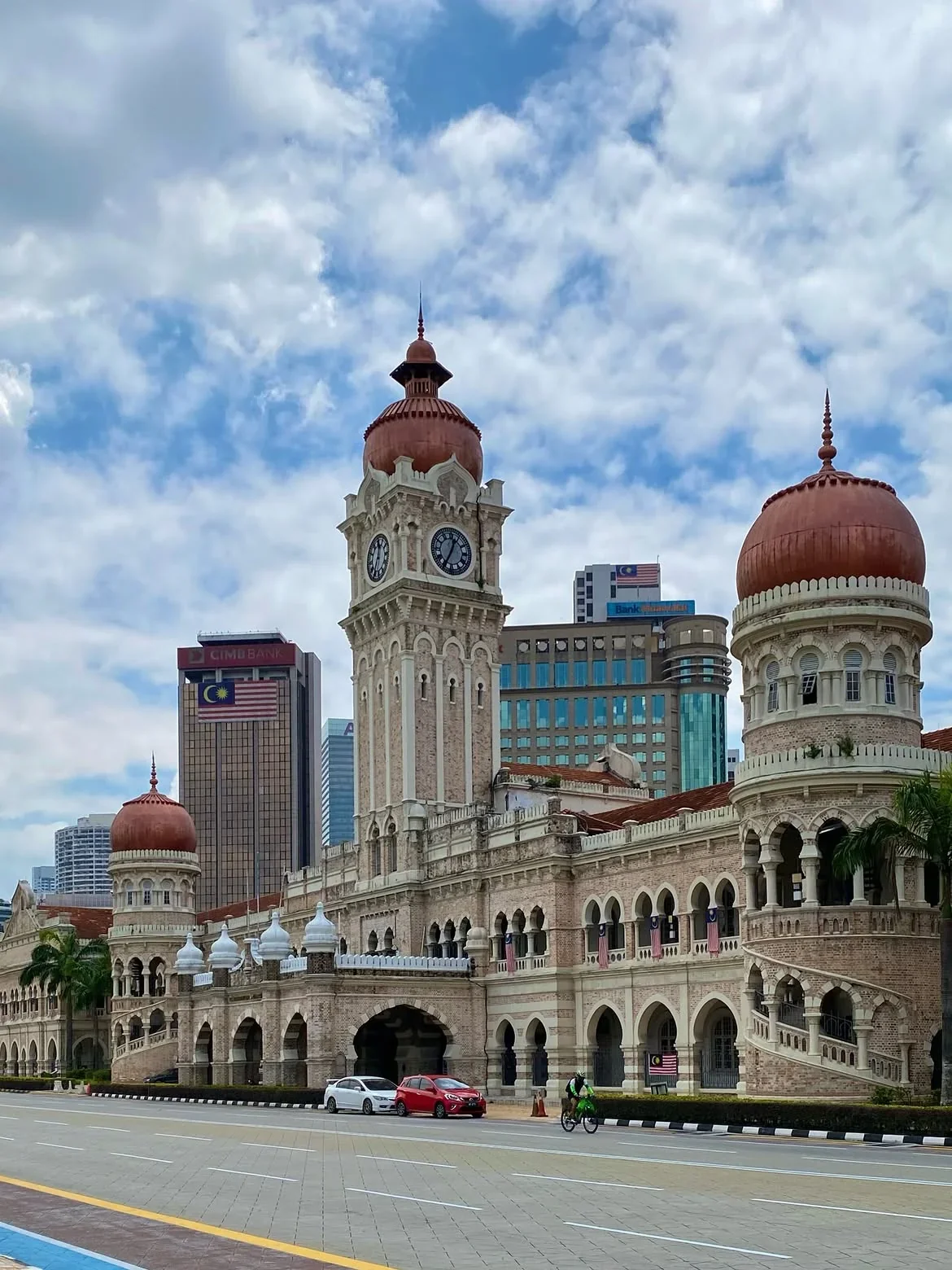
Sultan Abdul Samad Building (Instagram @klcityscapes)
Unveiled in 1897, the Sultan Abdul Samad Building served as the administrative epicenter of the British colonial government. Designed jointly by A.C. Norman and A.B. Hubback, the structure spans over 130 meters along Jalan Raja, anchored by a central 41-meter clock tower flanked by copper-domed turrets.
- Location: Jalan Raja, facing Dataran Merdeka
- Architectural Style: Indo-Saracenic / Mughal Revival
- Nearest Transit: Masjid Jamek Station
- The Experience: Standing across the lawn on Merdeka Square gives a full perspective of the building's copper domes glowing against the sunlight. At night, warm exterior lighting transforms the facade into one of the city's most photographed heritage sights.
- Pro-Tip: Cross the street toward Dataran Merdeka to view the historic flagpole where the Malayan flag was raised for the first time on August 31, 1957.
4. Central Market (Pasar Seni)
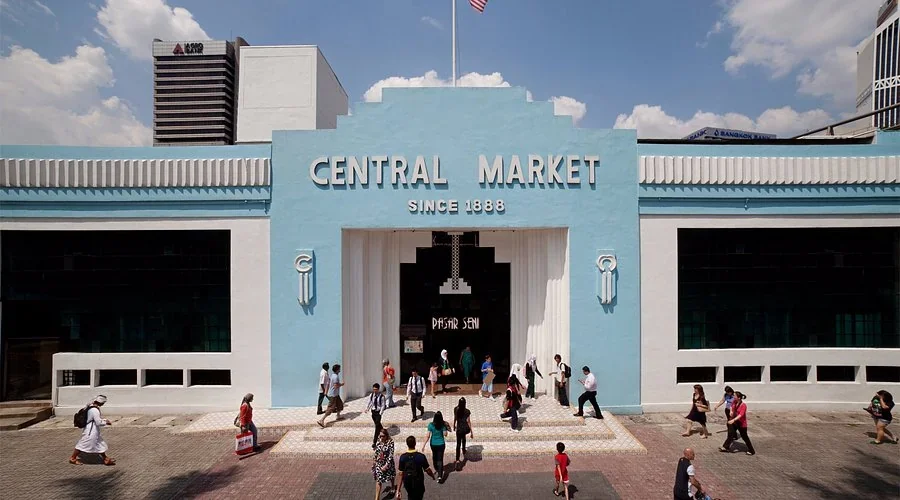
Central Market (Pasar Seni)
Originally built in 1888 as a wet market, Central Market underwent a complete architectural overhaul in 1937, adopting a clean Art Deco aesthetic designed by engineer T.Y. Lee. The pastel blue and cream facade features geometric ribbing, subtle stepped ziggurat motifs, and symmetrical relief panels typical of the 1930s style.
- Location: Jalan Hang Kasturi
- Architectural Style: Art Deco
- Nearest Transit: Pasar Seni LRT/MRT Station
- The Experience: Saved from demolition in the late 1970s, the structure now functions as a vibrant hub for Malaysian handicrafts, local art galleries, artisanal cafes, and souvenir shops.
- Pro-Tip: Head to the annex behind the main market building to discover local contemporary art galleries and independent pop-up exhibitions.
5. Lee Rubber Building
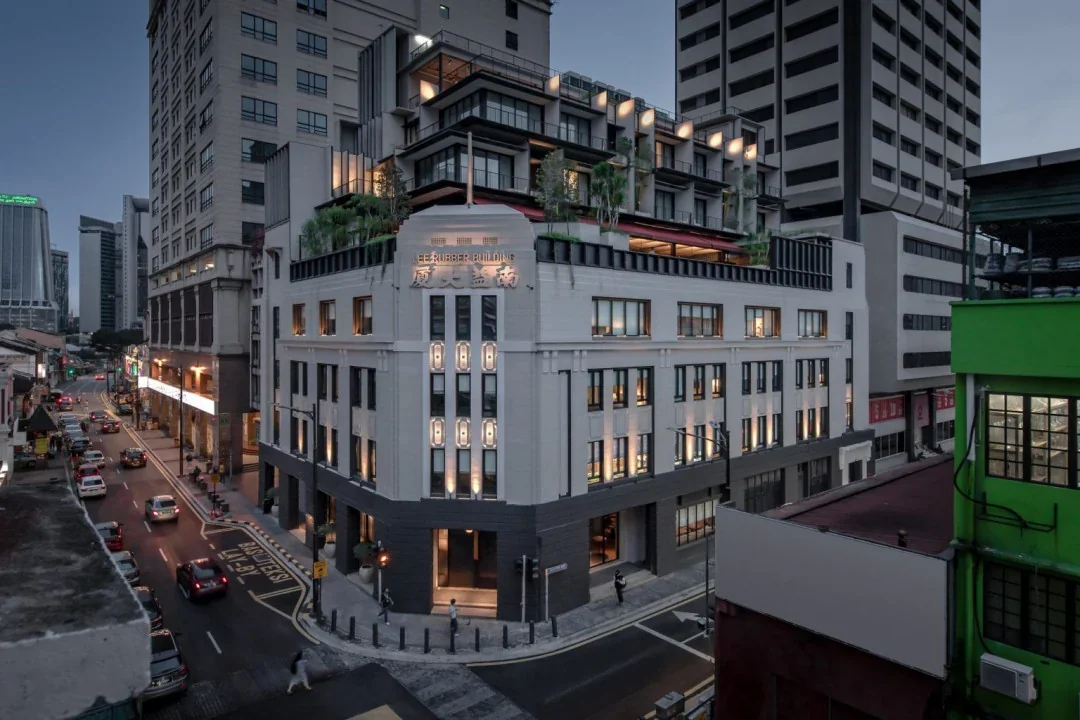
Lee Rubber Building
Constructed in 1930 for rubber tycoon Lee Kong Chian, the Lee Rubber Building remains one of Kuala Lumpur's finest surviving examples of commercial Art Deco design. Designed by the famous Singapore-based firm Booty Edwards & Partners, the building features strong vertical fins, a stripped-back geometric facade, and distinctive stepped corner details.
- Location: Junction of Jalan Tun H.S. Lee and Jalan Hang Lekir
- Architectural Style: Art Deco
- Nearest Transit: Pasar Seni Station
- The Experience: Occupying a prominent corner near Petaling Street, the building highlights how functional 1930s industrial architecture integrated seamlessly into dense tropical streetscapes.
- Pro-Tip: The surrounding intersection connects directly to KL’s historic Chinatown, making it an ideal spot to stop for coffee in nearby restored heritage cafes.
6. REXKL
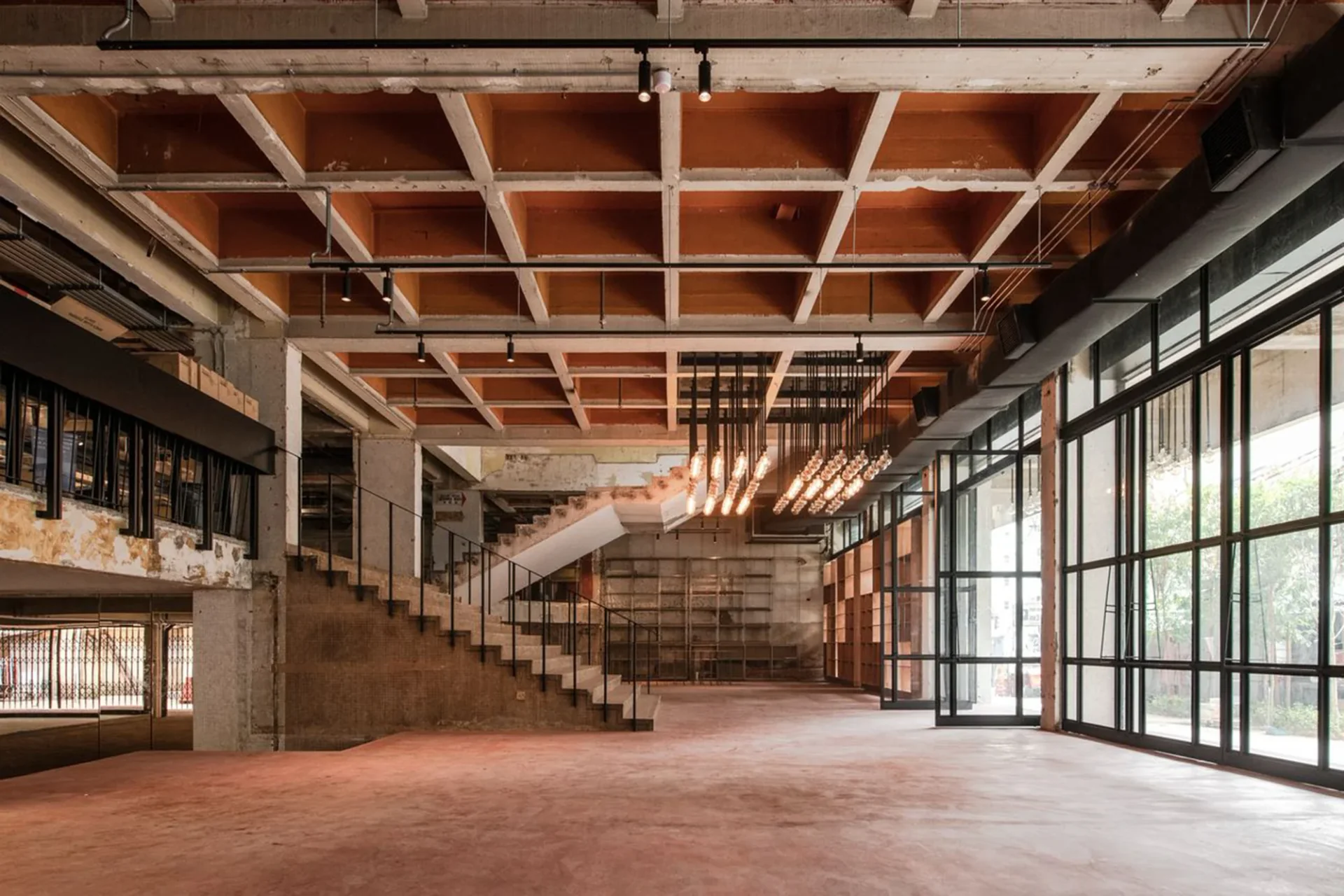
REXKL
Originally opened in 1947 as Rex Cinema—one of Chinatown's premier movie houses—the building endured two major fires before being repurposed into an urban cultural community hub. While preserving its original exposed brickwork, high concrete ceilings, and mid-century framework, REXKL now breathes new life into historic Chinatown.
- Location: 80, Jalan Sultan
- Architectural Style: Mid-Century Industrial / Adaptive Reuse
- Nearest Transit: Pasar Seni Station
- The Experience: The multi-level complex houses independent food stalls, vintage shops, event spaces, and BookXcess—a labyrinthine bookstore that spans the former theater's seating terraces.
- Pro-Tip: Navigate your way up to the top-floor bookstore for an elevated look down at the building's raw structural framework.
Practical Walking Tips
- Best Time to Walk: Start early around 8:30 AM to beat the midday heat, or begin around 4:00 PM to catch golden hour light across the heritage brickwork.
- Route Distance: The total walking distance between all six stops is roughly 2.5 kilometers, making it a comfortable 2-to-3-hour stroll including stops.
- Footwear & Hydration: Wear comfortable walking shoes for uneven heritage pavements, and stay hydrated by taking advantage of the air-conditioned stops along the route at Central Market and REXKL.


Related Articles